
What Our Clients Say
Our customers trust us to deliver exceptional results. Read what they have to say about their experience with Paint Protection Film Las Vegas
Car paint refinishing in Henderson, NV can be the better choice when a vehicle has peeling clear coat, poorly bonded paint, deep scratches, collision damage, rust, bubbling, or other problems that vinyl film cannot repair. A wrap can change a vehicle’s appearance, but it still depends on the condition of the surface underneath it.
That difference matters.
If the existing paint is sound and you simply want a different color or finish, vinyl wrap may make sense. If the surface itself is failing, damaged, or needs true repair, refinishing may need to happen before you think about wrapping anything.
3M states that wrap films should be applied to a vehicle finish in like-new condition for the strongest results. Its current vehicle-film guidance says rust, bubbling, scratches, dents, and other damage can remain visible through film and may contribute to premature film failure.
Avery Dennison gives similar guidance, stating that paint condition plays a major role in the appearance and performance of a vehicle wrap.
So when should you refinish the paint instead of covering it?
Let’s break it down.
Car paint refinishing is a repair process used when a painted automotive surface needs more than polishing or a cosmetic film.
Depending on the damage, refinishing can involve:
The exact process depends on what happened to the vehicle.
A scratched door may require a different repair from a bumper that has been hit. A panel with peeling clear coat is different from a panel with faded but otherwise intact paint.
3M’s collision-repair materials separate body repair, surface preparation, paint application, and final paint finishing into different stages. Its large-damage repair guidance also notes that repairs where the original paint layer has been broken can require sanding, repair materials, refinishing, and further surface work.
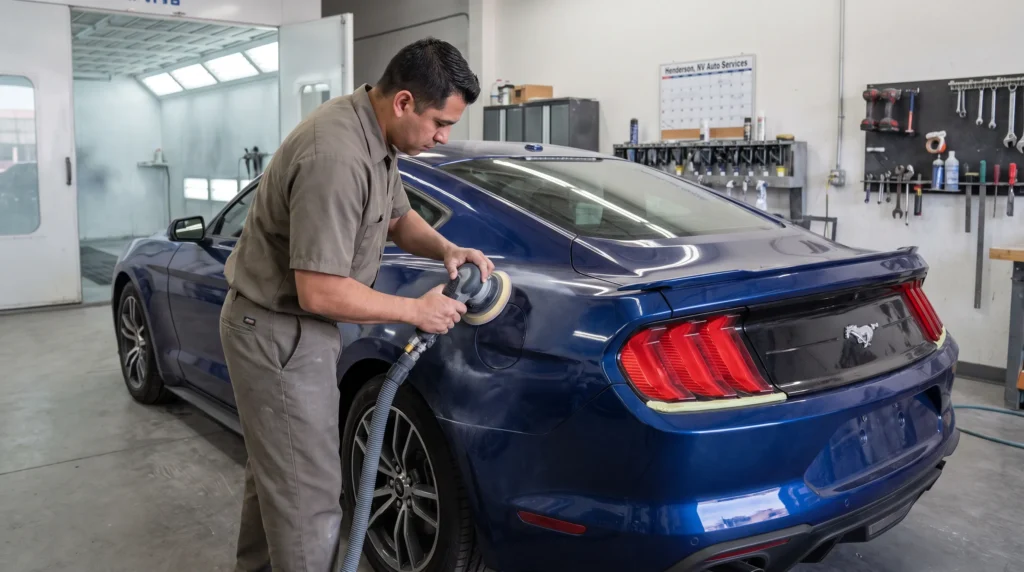
See the manufacturer’s 3M Collision Repair Applications and Resources for an overview of automotive refinishing processes.
Vinyl wrap is an automotive film placed over a suitable existing surface to change its appearance.
It can be used for:
A wrap does not replace the paint system below it.
That distinction is at the center of the car paint refinishing vs. wrap decision.
Avery Dennison states that the condition of a vehicle’s paint affects both the look and performance of a wrap. The company also says a vehicle wrap does not harm OEM paint when that paint is in good condition.
You can review Avery Dennison’s vehicle wrap information.
For local wrap service, see our vinyl wrap page.
Paint refinishing beats a wrap when the existing surface needs actual repair rather than a cosmetic covering.
Think about the condition underneath the film.
A wrap needs a stable surface to bond to.
3M’s December 2025 Protection Wrap Film installation guidance says rust, bubbling, scratches, dents, and other damage can remain visible through film. It also warns that these conditions can contribute to film failure.
Read the 3M Protection Wrap Film Vehicle Installation FAQ.
That gives us a straightforward rule:
If the problem is with the paint itself, deal with the paint before trying to cover it.
Peeling clear coat is a strong reason to look at refinishing instead of vinyl wrap.
A vehicle’s clear coat is the transparent outer layer over the color coat on many modern automotive paint systems.
When that layer starts peeling, flaking, or separating, the surface is no longer in sound condition.
Putting adhesive film over loose coating does not repair the bond between the clear coat and the layers below it.
The wrap adhesive may bond to paint or clear coat that is already separating.
That creates two concerns.
First, the damaged texture can remain visible through the film.
Second, a weak underlying coating may lift with the film during installation, service, or removal.
If the clear coat is failing, have the panel inspected for refinishing before considering vinyl.
Vinyl wrap should not be treated as rust repair.
Rust is a problem with the metal surface, not just the color you see from the outside.
Paint bubbling can also point to trouble beneath the visible coating.
Covering corrosion with vinyl does not remove it.
3M’s current vehicle-film guidance names rust and bubbling among the conditions that can show through film and may lead to poor results.
Refinishing may be one part of the repair after the damaged material and corrosion have been dealt with properly.
The repair required depends on how far the corrosion has spread.
If you see bubbling paint, have the area inspected rather than asking a wrap installer to hide it.
Some scratches affect only the upper portion of the clear coat.
Others cut much deeper.
If a scratch reaches through the paint system and exposes primer, plastic, or bare metal, wrapping the panel does not rebuild what is missing.
The defect may remain visible as a line or depression beneath the vinyl.
Exposed metal can also need repair before it is covered.
Here is why this matters: vinyl follows the surface below it.
It does not level a gouge the same way a proper body and refinish repair can.
If a scratch is light, paint correction may be worth discussing first.
If it is too deep for correction, refinishing may be the better route.
Collision damage usually calls for repair before appearance changes.
A dented, cracked, gouged, or repaired panel may need:
3M defines large collision damage as repair where the original paint layer has been broken and the damage includes major denting. Its repair process includes repairing the surface and preparing it for refinishing.
See the 3M Large Damage Repair Process.
A vinyl wrap belongs later in the conversation, after the surface has been restored and the new coating has cured according to the paint manufacturer’s requirements.
Previous repaint work deserves attention before vinyl or PPF is installed.
Aftermarket paint is not automatically a problem, but its bond needs to be sound.
Avery Dennison recommends inspecting vehicles for previous paint work before wrapping. Its technical guidance points out that paint condition has a direct effect on the finished wrap.
3M also warns that film may interact differently with different paints and coatings.
Possible warning signs include:
Tell your installer when you know that a panel has been repainted.
If you bought the vehicle used and are not sure, an inspection may reveal signs of earlier body work.
Not every ugly paint problem requires refinishing.
Sometimes the paint is still healthy but has surface defects.
That is where paint correction comes in.
Paint correction uses machine polishing to reduce suitable defects in the existing finish.
It may help with issues such as:
3M’s automotive paint-finishing systems use sanding, compounding, and polishing methods to refine painted surfaces after repair.
See the 3M Paint Finish Full Panel Process.
The difference is simple.
Paint correction improves existing paint.
Refinishing replaces or rebuilds part of the coating system.
Vinyl wrap covers a suitable finished surface with film.
Those are three different jobs.
Vinyl wrap can make much more sense when the factory paint is sound and your main goal is appearance.
Say you have a clean vehicle with healthy OEM paint but want a completely different color.
Repainting the whole vehicle may not be necessary for that goal.
A vinyl wrap can give you a temporary appearance change while leaving suitable original paint beneath it.
Vinyl also makes sense for:
If appearance is the reason for the project, see our vinyl wrap service.
Businesses can also use commercial car wraps for branded vehicles.
It may visually cover the color of bad paint, but that does not mean it fixes the surface.
Texture can show through.
Think about wrapping paper over a damaged box. The paper changes what you see, but dents and rough areas beneath it can still affect the outer surface.
Vehicle film behaves differently from paper, but the same idea applies.
3M says scratches, dents, rust, bubbling, and other defects can remain visible through automotive film.
Avery Dennison also says paint condition affects wrap appearance.
If you want a smooth finished wrap, start with a smooth, stable surface.
Wrapping failing paint to avoid repairing it can leave you disappointed with both the appearance and durability.
Yes, refinished paint can sometimes be wrapped, but timing and paint condition matter.
Do not apply film over fresh paint simply because it feels dry.
Automotive paint and clear coat need to cure according to the coating manufacturer’s requirements.
3M’s substrate-preparation guidance tells installers to follow paint manufacturers’ cure recommendations before applying film.
See the 3M Application: Substrate Selection and Preparation.
Fresh refinishing should be discussed with both the paint facility and film installer.
Before wrapping a refinished panel, confirm:
Do not rush this stage.
Color PPF brings another option into the conversation.
Color PPF can change the exterior color while adding the thicker polyurethane construction associated with paint protection film.
Like vinyl, Color PPF still needs a suitable surface underneath it.
It should not be viewed as a shortcut around failing paint.
If your existing finish is stable and you want a new color plus stronger protection from road debris, Color PPF may make sense.
If the paint is peeling, bubbling, or badly damaged, address that condition first.
For drivers in Henderson, NV and Las Vegas, NV, the choice may look like this:
Once damaged paint has been properly refinished and cured, clear PPF may be worth discussing.
Paint protection film is made to protect suitable painted surfaces from road exposure.
A driver may choose PPF on:
This creates a logical order when a vehicle needs repair:
Trying to reverse that order does not solve underlying paint damage.
Cars in Henderson, NV and Las Vegas, NV spend plenty of time outdoors and on high-speed roads.
That means paint and film can both see:
Those conditions do not automatically mean refinishing is better than wrapping.
The decision still starts with the condition of the surface.
A sound factory finish can be an excellent candidate for vinyl.
A failing finish should be repaired first.
If the paint is simply scratched or swirled, correction may solve the concern without either refinishing or wrapping.
That is why inspection comes before choosing the service.
Ask yourself what problem you are trying to solve.
Look for peeling, bubbling, corrosion, or coating separation.
If yes, start with repair and refinishing.
Fix the damaged panel before thinking about film.
Ask whether paint correction can improve them.
Vinyl wrap may be the right direction.
Look at Color PPF.
Consider clear paint protection film.
Have the vehicle inspected.
The real question is not whether paint or vinyl is better in every situation.
It is which process solves the actual condition of your vehicle.
Film manufacturers are consistent on this point.
3M recommends a like-new vehicle finish for its Protection Wrap Film and says defects such as bubbling, rust, dents, and scratches can remain visible and interfere with film performance.
Avery Dennison says paint condition is a major part of wrap appearance and performance.
That means surface preparation is not just about cleaning the car.
The underlying coating needs to be stable enough for film.
If it is not, refinishing can beat a wrap because it addresses the problem that film cannot.
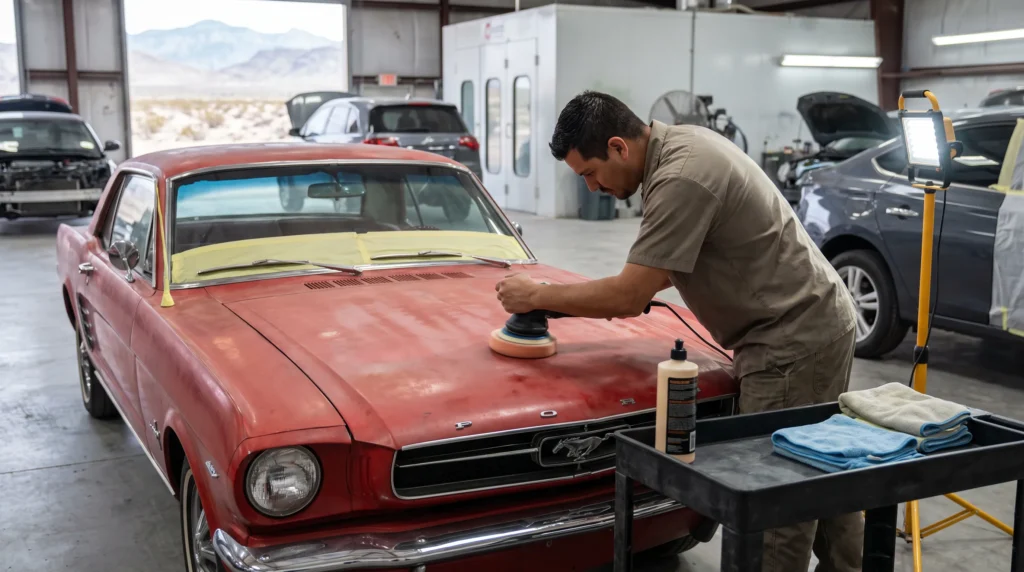
Once the paint is restored, you can then decide whether to leave it painted, add PPF, use Color PPF, or apply vinyl after the coating has cured and been approved for film installation.
Car paint refinishing in Henderson, NV can beat a wrap when the vehicle needs genuine paint repair.
A wrap is a strong choice for changing the appearance of healthy paint.
It is not a substitute for fixing peeling clear coat, corrosion, collision damage, poorly bonded repaint work, or deep defects that go beyond what polishing can address.
Paint Protection Film Las Vegas serves vehicle owners throughout Henderson, NV and Las Vegas, NV from:
7585 Commercial Way Suite H Henderson, NV 89011
Our vehicle appearance and protection services include:
If you are not sure whether your paint needs correction, refinishing, PPF, or vinyl, start by having the surface inspected.
Call (725) 318-7445 or visit our contact page to schedule an appointment.
We are open Monday through Friday from 9 AM to 6 PM. Saturday is available by appointment.
Paint refinishing is better when the underlying coating needs repair. Peeling clear coat, corrosion, deep scratches, collision damage, and poorly bonded paint should not simply be hidden under vinyl. Wrap makes more sense when the existing paint is sound and the goal is mainly a new appearance.
Film can physically cover an area, but peeling clear coat is not a sound surface for wrapping. 3M recommends a like-new finish and warns that bubbling, rust, scratches, dents, and other damage can remain visible through film or contribute to early failure.
Very light marks may become less noticeable depending on the film, but deeper scratches and surface texture can remain visible. If the scratch is correctable, paint correction may be worth discussing before a wrap.
It may be possible after the refinished coating has fully cured and the surface is suitable for film. Follow the paint manufacturer’s cure requirements and tell the wrap installer which panels were refinished.
If the existing paint is damaged or failing, repair and refinishing may need to come first. If the paint is sound and you want a different color with a thicker protective film, Color PPF may fit the project.
Only when the defects are within a correctable portion of the existing finish. Paint correction can reduce suitable swirls, haze, scratches, and other surface defects, but it cannot replace missing paint or rebuild peeling clear coat.
Paint Protection Film Las Vegas is located at 7585 Commercial Way Suite H, Henderson, NV 89011 and serves Henderson, NV and Las Vegas, NV. Call (725) 318-7445 or use our contact page to schedule an appointment.
How Long Does Ceramic Coating Last in the Las Vegas Desert Heat?. How long does ceramic coating last in the Las Vegas desert heat is the question we hear most from drivers in Las Vegas, NV and Henderson, NV. The short answer: a professionally installed coating that’s prepped and maintained correctly can deliver multi-year durability even under intense sun and dust. The longer answer depends on paint condition, product choice, where you park, and how you wash. Let’s break it down so you can decide what’s right for your vehicle.
Complete Vehicle Protection & Customization
We specialize in Paint Protection Film (PPF), Color PPF, Ceramic Coating, and Paint Correction to keep your vehicle looking showroom-new for years to come.
From Window Tint to Vinyl Wraps and Commercial Wraps, we offer comprehensive customization solutions that combine style with function.


Experience the difference that precision craftsmanship and attention to detail can make. Call us at (725) 318-7445 or request a free quote to get started on your vehicle protection project.
Visit Our Shop