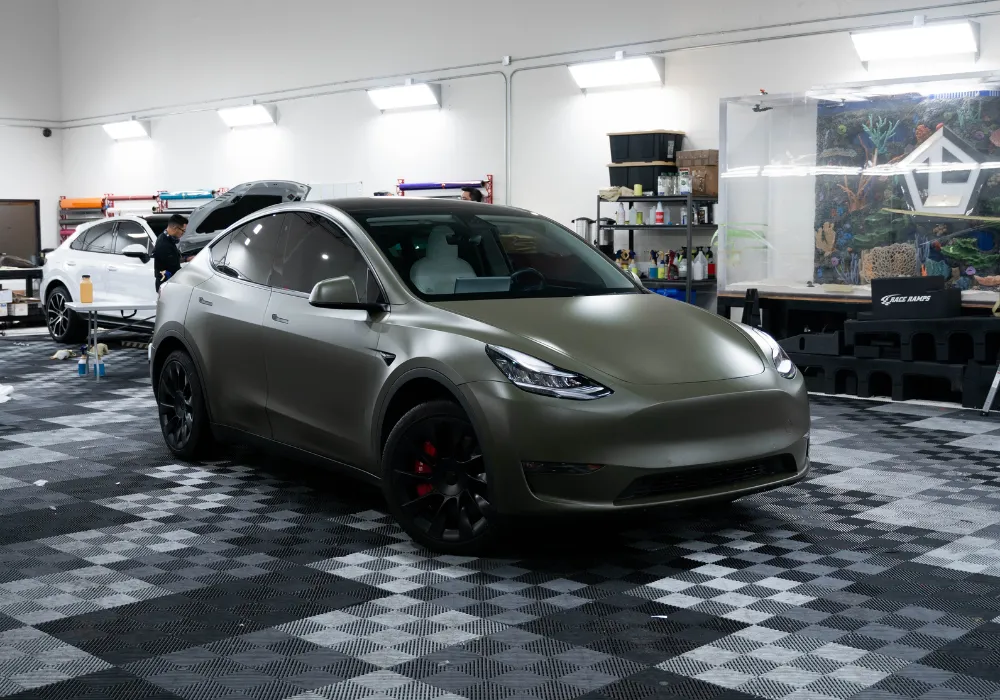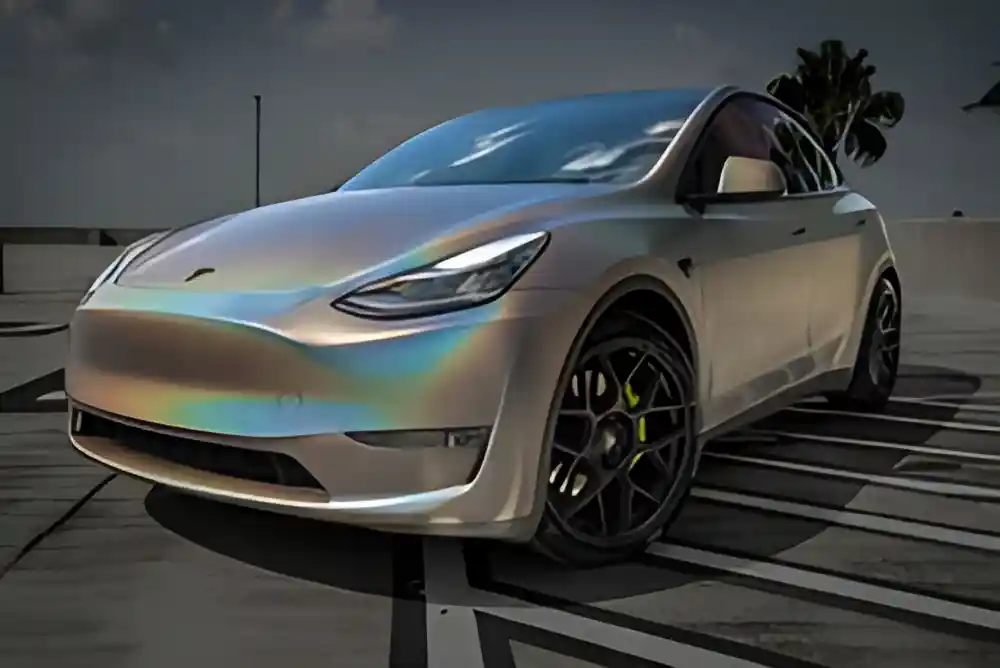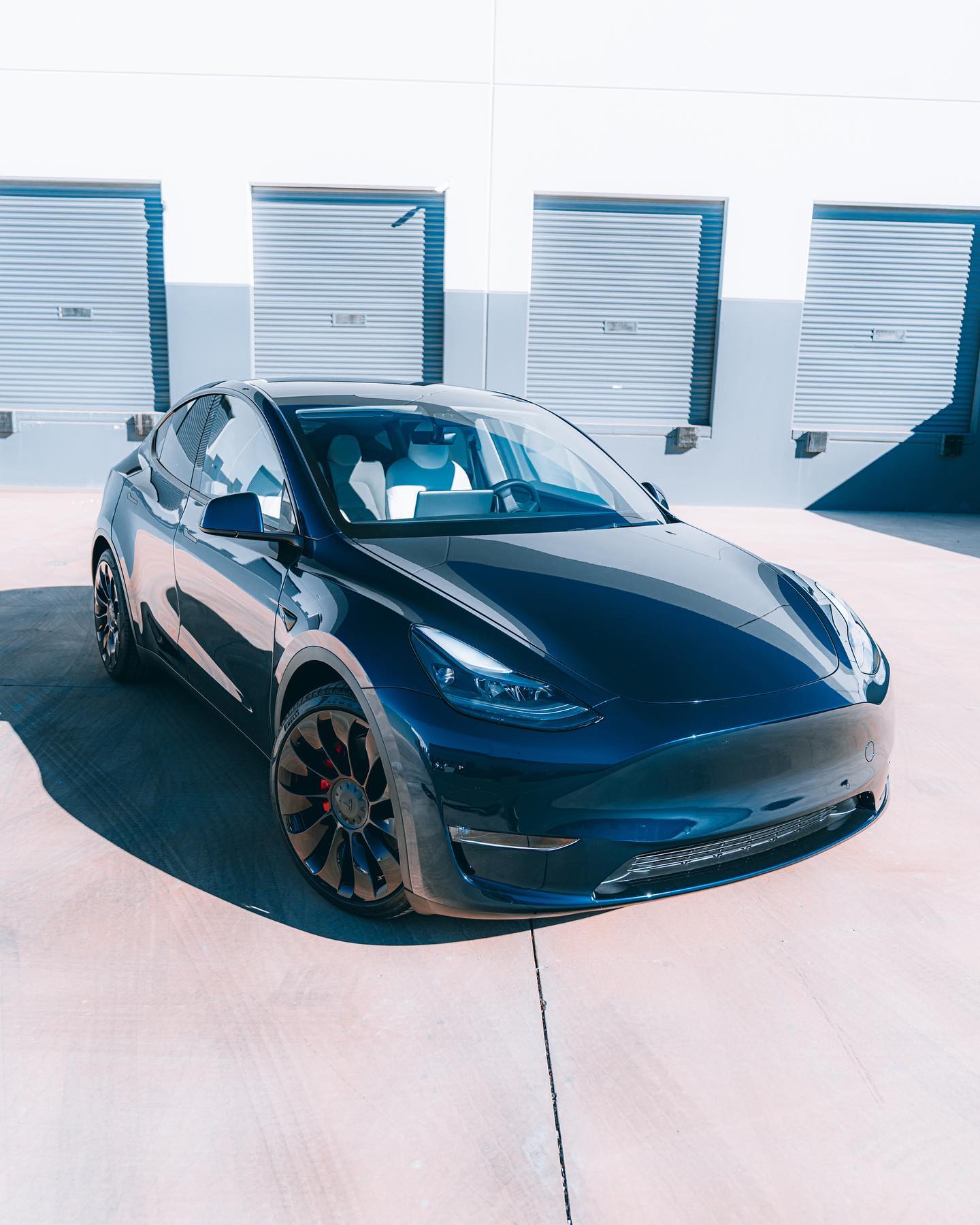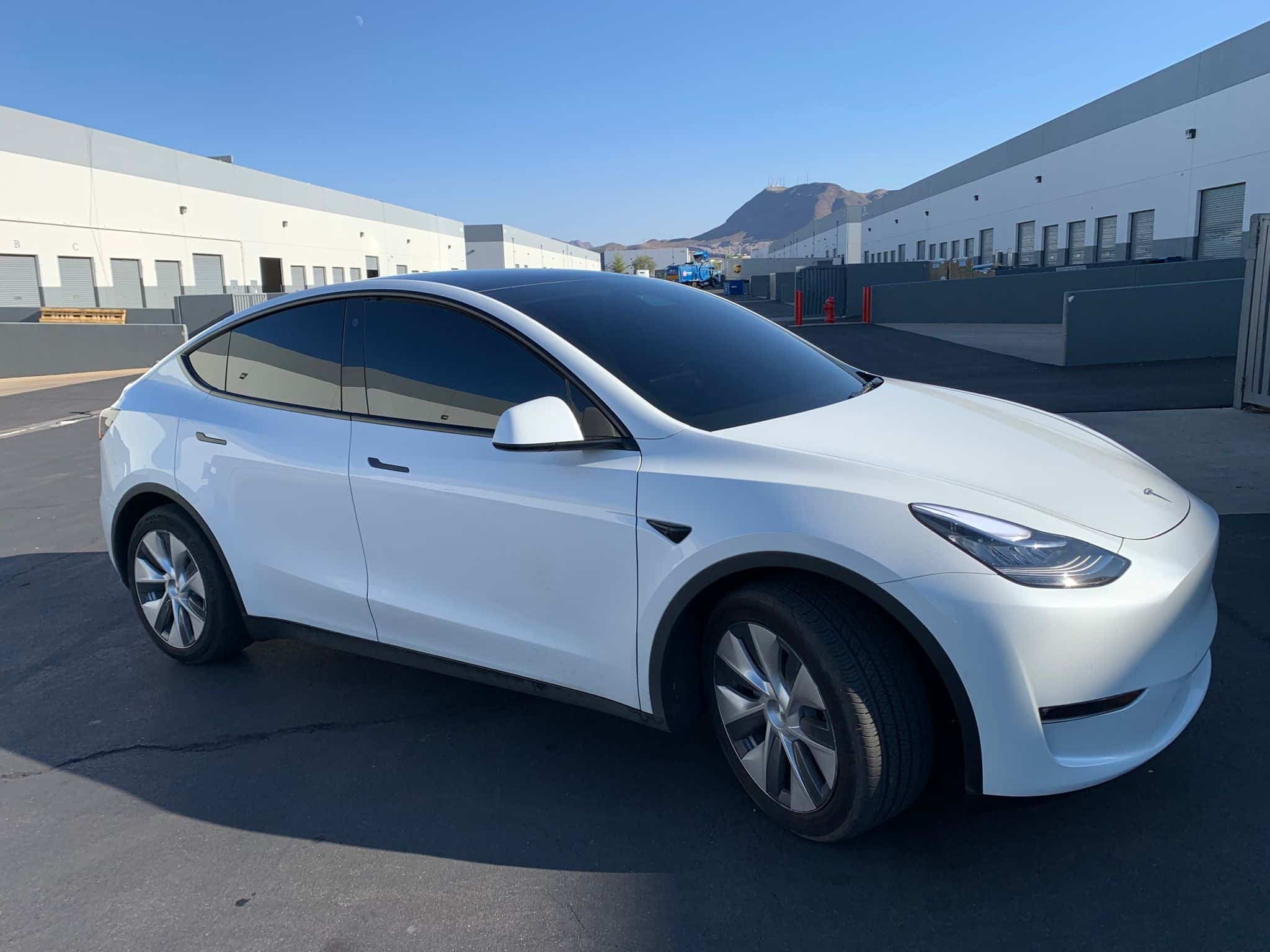

What Our Clients Say
Our customers trust us to deliver exceptional results. Read what they have to say about their experience with Paint Protection Film Las Vegas
Paint protection film for trucks in Las Vegas gives owners another layer of protection against rock chips, sand, gravel, scratches, bugs, road debris, and other contact that can reach painted surfaces. For trucks and off-road builds, deciding where to install PPF is especially important because different parts of the vehicle can face very different types of exposure.
A daily-driven pickup that occasionally heads onto a dirt road may only need protection in several high-impact areas. A lifted truck, desert build, overland rig, or off-road SUV may benefit from coverage extending well beyond the front bumper and hood.
That does not mean PPF makes a truck trail-proof.
A hard rock strike, branch, deep gouge, collision, or body contact with an obstacle can cut through film and damage the surface below it. PPF is better viewed as a sacrificial layer designed to take many scratches, chips, and abrasions before they reach the factory finish.
For drivers in Las Vegas, NV and Henderson, NV, the right coverage comes down to where the truck is driven, tire setup, body shape, and which painted areas receive the most abuse.
Here is how to plan PPF for a truck or off-road build.
Trucks can expose paint to different hazards than a typical commuter car.
The front end still faces normal highway debris, but larger tires, gravel roads, desert trails, construction sites, and off-road use can expose the lower sides and rear body panels as well.
Areas that may see repeated contact include:
3M states that automotive PPF is designed to protect vulnerable vehicle surfaces from stone chips, scratches, bug damage, road tar, stains, and outdoor exposure.
The company also identifies rocker panels as an area PPF can protect from sand and stones kicked up by tires.
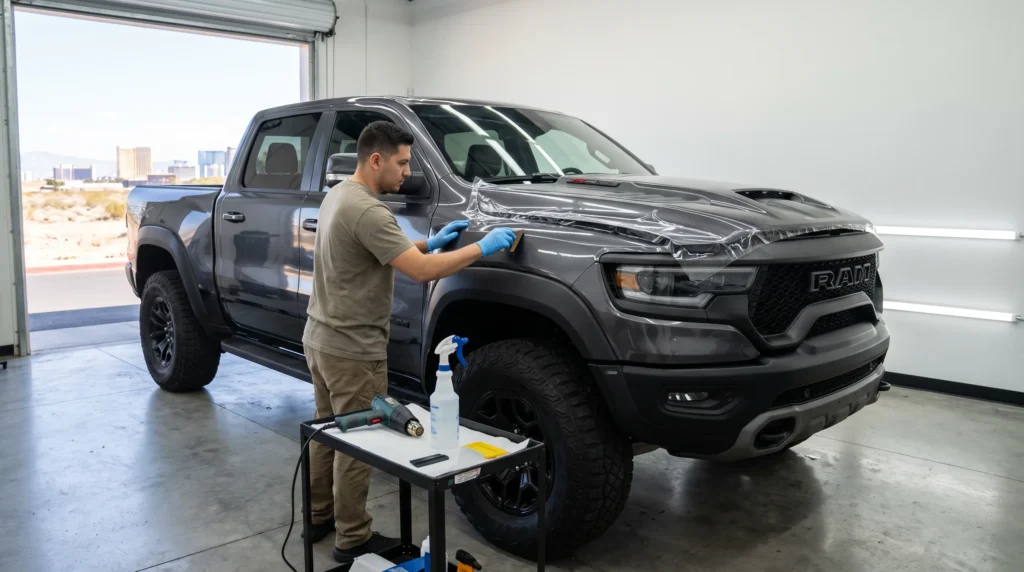
That makes rocker coverage especially worth discussing on pickups and off-road vehicles.
Learn more about our paint protection film service.
PPF can be useful for off-road driving, but expectations matter.
XPEL says PPF can help protect against scratches, chips, and debris found during off-road use. The company has also documented PPF installations on vehicles such as the Ford F-150 Raptor, Ford Bronco, and Toyota Tacoma used in off-road environments.
LLumar markets certain PPF products for exposure to gravel roads, flying rocks, sand, and other road debris.
Those are the kinds of hazards where film can help.
Still, off-road driving can expose a vehicle to much harder contact than normal pavement driving.
A tree branch dragged down the complete side of a truck is different from a small stone hitting the bumper.
A boulder contacting a rocker panel is different from tire-thrown gravel.
PPF can reduce many surface scratches and chips, but no film should be treated as body armor.
Start with the areas taking the most hits.
For many trucks, that means considering:
The order can change based on your build.
A stock pickup used mainly on pavement may place most of its PPF on the front.
A lifted truck with larger tires may need much more attention along the rockers, rear fenders, and bedsides.
An off-road build that travels on narrow trails may benefit from broader side coverage because branches and brush can contact doors and quarter panels.
The front bumper faces road and trail debris first.
On painted bumpers, PPF can help protect against:
Truck bumpers can also have complicated shapes.
Depending on the vehicle, the installer may need to work around:
If an aftermarket bumper replaces most painted front surfaces with exposed metal, there may be less painted area to cover.
That is why PPF should be planned around the actual build rather than the truck’s factory configuration.
Truck hoods tend to have a large surface area.
The leading portion faces gravel, bugs, and road debris during highway use.
A truck driven behind other vehicles on dirt roads can also receive dust and stones across the front end.
Owners can choose between partial hood coverage and complete hood PPF.
Full hood coverage avoids leaving a film line across the middle of the panel.
If the hood has scoops, vents, graphics, or aftermarket parts, ask how those pieces will affect installation.
Front fenders sit close to the tires and front bumper.
They can receive debris from both the road and the truck’s own tires.
Full front PPF commonly includes:
For a pavement-driven pickup, this may cover many of the areas exposed during highway travel.
An off-road truck may need more protection behind the front fenders as well.
Rocker panels are one of the areas truck owners should look at closely.
They sit low and close to material thrown from the tires.
3M specifically identifies rocker panels as a PPF application area for protection from sand and stones kicked up by tires.
On trucks used around Las Vegas, NV and Henderson, NV, that can mean exposure to:
If your truck has running boards or rock sliders, look at which parts of the painted rocker remain exposed.
Those areas may still receive debris even when metal accessories provide some physical protection.
Lower doors can take repeated hits from debris leaving the tires.
This is especially worth considering when a truck has:
The farther a tire sits outside the body, the more closely you should inspect the side of the truck for debris patterns.
PPF can be extended above the rocker to cover lower door sections where needed.
You do not have to wrap the complete door if the concern is concentrated along the bottom.
Pickups have another high-impact area that cars do not: the bedsides.
The painted area around and behind the rear tires can receive debris kicked up by the tires.
Wide rear tires can make this area especially worth watching.
Look for existing chips along:
If you already see a pattern of chips, it can tell you where future protection may be useful.
PPF can be cut to cover selected impact areas or larger sections depending on the installation plan.
The tailgate does not face highway debris like the front bumper, but it gets plenty of contact during normal truck use.
Think about what happens when you:
Paint near the upper tailgate and bed opening can collect scratches and scuffs.
PPF can be used on suitable painted loading surfaces to create a sacrificial layer.
For a work truck or camping build, this may make more sense than protecting a panel that rarely gets touched.
Trail use is not the only source of truck scratches.
Door edges can contact garage walls, posts, nearby vehicles, or equipment.
Areas around handles can collect marks from rings, keys, fingernails, and repeated use.
3M identifies door edges and handle cavities as areas where PPF can protect against contact.
These are small coverage areas but can be worth adding while other film is being installed.
Fender flares can change the way debris moves around a truck.
Some flares are painted.
Others use textured plastic or other materials.
The paint immediately around a flare may also be exposed to:
The correct film plan depends on the material and how the flare is attached.
If aftermarket flares are going onto the truck, it may make sense to discuss PPF before the accessories are installed.
That gives the installer a chance to look at whether film belongs beneath or around certain mounting areas.
Tire setup can change where debris lands.
A stock truck with narrow factory tires may throw material differently from a truck running larger all-terrain or mud-terrain tires.
Changes that deserve attention include:
If the tires project farther outward, inspect the rockers, lower doors, rear fenders, and bedsides.
Those may become higher-priority PPF areas.
Here’s what matters: do not copy a standard truck PPF package if your wheel and tire setup has changed where debris goes.
Full front PPF and high-impact PPF solve slightly different problems.
This package usually concentrates protection on:
It can make sense for a truck that sees plenty of highway use.
This type of coverage can add:
For a truck used on gravel roads or trails, this added side coverage may matter just as much as the hood.
You can combine both approaches.
Full-body PPF can make sense for some off-road builds, but it is not required for every truck.
Think about how you use the vehicle.
Full-body coverage may be worth discussing when:
Targeted coverage may make more sense when:
You can protect the areas that matter most without wrapping every panel.
Not every truck has a traditional gloss finish.
Matte and satin paint or appearance packages require film selected for the desired look.
Gloss PPF can change the appearance of a matte surface.
Matte or satin PPF can also be used intentionally to change the look of suitable gloss paint.
XPEL’s STEALTH film is one example of a satin-finish PPF, and the company has documented installing it across a Ford F-150 Raptor and Ford Bronco.
If your truck has matte paint, decals, graphics, vinyl, or an unusual finish, tell the installer before choosing film.
The goal is to protect the surface without creating an appearance you did not expect.
PPF and vinyl wrap are not interchangeable.
PPF is the better fit when physical paint protection is the main concern.
Vinyl is used mainly to change:
A vinyl wrap can cover paint, but it should not be treated as though it offers the same protection against rocks and trail debris as paint protection film.
If you mainly want a different truck color or custom styling, see our vinyl wrap service.
If you want a color change plus the thicker protective qualities associated with PPF, see our Color PPF service.
“Desert pinstriping” is commonly used to describe the long scratches trucks and off-road vehicles can pick up from brush and branches along narrow trails.
PPF can help with many light surface scratches because the film sits above the factory finish.
Some modern films also have self-healing top layers designed to reduce minor surface marks with heat.
3M lists self-healing technology on selected PPF products for minor scratches or marks.
XPEL likewise lists self-healing properties on several of its PPF products.
Still, the depth and force of the branch contact matter.
A light brush mark and a branch pressed hard against a moving vehicle are not the same event.
A sharp branch can cut through PPF.
Do not treat film as a guarantee against every trail scratch.
PPF has limits, especially on an off-road vehicle.
It cannot guarantee protection from:
3M’s consumer support information makes a similar distinction by noting that its warranty does not cover dents caused by the physical impact of rocks or road debris.
PPF is designed to protect surfaces.
Rock sliders, skid plates, bumpers, and other off-road hardware protect against different types of physical contact.
They can work together, but they do different jobs.
It depends on the accessory.
If you are building a truck with:
Tell the PPF installer about the complete build plan.
Some areas may be easier to cover before an accessory is mounted.
Other accessories may need to be installed first so the film can be fitted around the final configuration.
Planning the order can also reduce unnecessary removal and reinstallation.
A truck does not need to be brand new for PPF.
The existing paint still needs inspection.
Clear film will not rebuild:
Light scratches or swirls may be candidates for paint correction before film goes on.
Off-road trucks can also hold dirt in:
Cleaning and surface preparation matter before PPF installation.
An off-road truck can come back covered in dust, dirt, sand, or mud.
Remove heavy contamination before rubbing the film.
Useful habits include:
3M recommends touchless automatic washing over brush-style washes because brushes can scratch or dull PPF and may lift film edges.
For professional vehicle cleaning, see our auto detailing service.
Ceramic coating and PPF have different jobs.
PPF provides the physical film layer.
Ceramic coating is a liquid-applied coating used on compatible surfaces.
Some current PPF products already include hydrophobic top layers. Other owners choose a separate coating over compatible film.
A coating does not make the PPF immune to off-road impacts.
If you want to combine the services, ask about compatibility with the exact film being installed.
Learn more about our ceramic coating service.
Not every truck seeing heavy use is an off-road recreational build.
Work trucks can face:
Targeted PPF can protect selected surfaces without requiring full-body coverage.
Areas such as rockers, lower doors, hood edges, front bumpers, and tailgate loading zones may deserve attention depending on how the truck is used.
Businesses with multiple vehicles can also review our commercial paint protection film service.
If your goal is company graphics instead, see our commercial vehicle wrap service.
Start with the truck rather than a preselected package.
Walk around it and ask:
Think bumper, hood, fenders, and mirrors.
Look at rockers, doors, rear fenders, and bedsides.
Think tailgate, bed edges, door openings, and loading areas.
Look at doors, fenders, quarter panels, and bedsides.
Wheel offset, larger tires, flares, bumpers, sliders, and other parts can change where protection makes sense.
A highway commuter and a desert trail build should not automatically receive the same coverage.
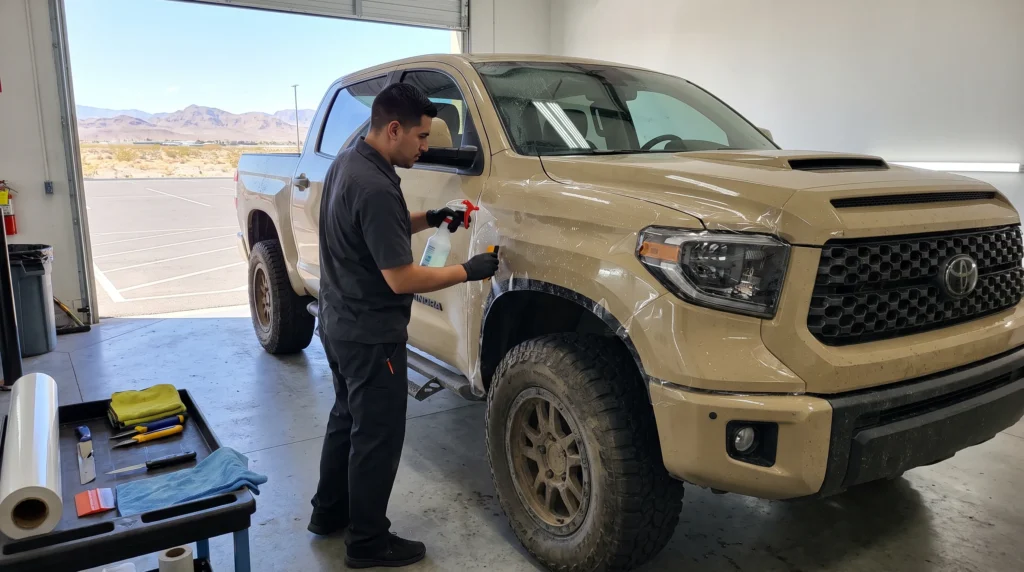
What this means is that truck PPF works best when it follows the actual exposure pattern of your vehicle.
Paint protection film for trucks in Las Vegas can be planned around highway use, gravel roads, desert driving, work sites, or off-road builds.
You may want only a full front.
You may want front-end PPF plus rockers and lower doors.
A truck with larger tires may need added protection around the rear fenders and bedsides.
An off-road build exposed to brush may benefit from much broader side coverage.
Paint Protection Film Las Vegas serves truck owners throughout Las Vegas, NV and Henderson, NV from:
7585 Commercial Way Suite H Henderson, NV 89011
Our services include:
Call (725) 318-7445 or visit our contact page to schedule an appointment and discuss which areas of your truck should be covered.
Business hours are Monday through Friday from 9 AM to 6 PM. Saturday is available by appointment.
PPF can make sense when you want to reduce paint damage from rocks, sand, gravel, light scratches, brush contact, and road debris. It cannot prevent every dent, gouge, or heavy off-road impact, so coverage should match the type of driving you do.
Start with the front bumper, hood, front fenders, and mirrors for road-facing protection. Trucks with larger tires or off-road use may also benefit from rocker-panel, lower-door, rear-fender, and bedside PPF.
PPF can help with many light surface scratches and brush marks. Some films can self-heal minor surface marks. A sharp branch or hard contact can still cut through the film and damage the paint below it.
Rocker panels are worth considering because they sit close to debris thrown by the tires. 3M specifically identifies rocker panels as an area where PPF can protect against sand and stones kicked up during driving.
They can. Wider tires, different wheel offsets, spacers, and removed mud flaps can change where dirt and debris are thrown. Inspect the lower doors, rockers, rear fenders, and bedsides when planning coverage.
If protecting paint from rocks, scratches, and road debris is your main concern, PPF is the more appropriate material. Vinyl wrap is mainly used to change color, finish, or graphics. Color PPF is another choice if you want both an appearance change and PPF-style protection.
Paint Protection Film Las Vegas serves Las Vegas, NV and Henderson, NV from 7585 Commercial Way Suite H, Henderson, NV 89011. Call (725) 318-7445 or use our contact page to schedule an appointment.
How Long Does Ceramic Coating Last in the Las Vegas Desert Heat?. How long does ceramic coating last in the Las Vegas desert heat is the question we hear most from drivers in Las Vegas, NV and Henderson, NV. The short answer: a professionally installed coating that’s prepped and maintained correctly can deliver multi-year durability even under intense sun and dust. The longer answer depends on paint condition, product choice, where you park, and how you wash. Let’s break it down so you can decide what’s right for your vehicle.
Complete Vehicle Protection & Customization
We specialize in Paint Protection Film (PPF), Color PPF, Ceramic Coating, and Paint Correction to keep your vehicle looking showroom-new for years to come.
From Window Tint to Vinyl Wraps and Commercial Wraps, we offer comprehensive customization solutions that combine style with function.


Experience the difference that precision craftsmanship and attention to detail can make. Call us at (725) 318-7445 or request a free quote to get started on your vehicle protection project.
Visit Our Shop