
What Our Clients Say
Our customers trust us to deliver exceptional results. Read what they have to say about their experience with Paint Protection Film Las Vegas
PPF for leased cars in Las Vegas can help protect painted surfaces from rock chips, scratches, bug damage, road debris, and other wear that may become an issue when the vehicle is returned. If you lease a car in Las Vegas, NV or Henderson, NV, paint protection film can give exposed panels another layer between the factory paint and everyday road use.
There is one thing to clear up first.
PPF does not guarantee that you will get a security deposit back, avoid every lease-end charge, or pass every inspection without a fee. Lease terms are different, and some leases do not use a security deposit at all. The Consumer Financial Protection Bureau requires auto leases to disclose standards for excessive wear and use, and the lessor may charge for damage that falls outside those standards.
That is why the better goal is to reduce avoidable paint wear while following your lease agreement.
For many leased vehicles, that does not mean covering the entire car. Front-end PPF, rocker-panel coverage, door edges, and other exposed areas may make more sense than full-body film.
Here is how to decide where PPF is worth using on a leased car.
Yes, PPF can make sense on a leased vehicle when your goal is to protect exposed paint during the lease term.
Paint protection film is a clear polyurethane film placed over suitable painted surfaces.
3M states that its Paint Protection Film Series 100 is designed to protect automotive paint from rock chips, scratches, bug damage, road tar, stains, and outdoor exposure.
That makes PPF relevant to leased cars because many lease-end inspections look at exterior condition.
PPF cannot stop every kind of damage. A hard impact can still damage the film and may also damage the paint below it.
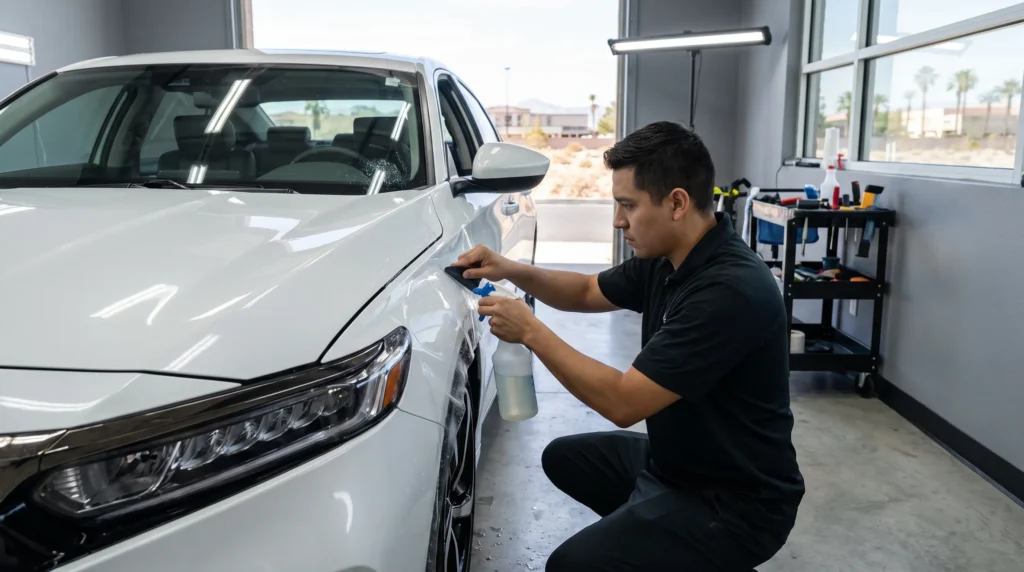
Still, placing film over exposed areas can reduce direct contact between the factory paint and common road hazards.
If you are considering film for a leased vehicle, visit our paint protection film service.
Vehicle leases can include standards for normal and excessive wear.
The Consumer Financial Protection Bureau states that motor vehicle leases must include notice that a lessee may be charged for excessive wear based on the lessor’s standards.
Those standards vary by leasing company.
That means you should not assume one manufacturer’s lease-return rules apply to another.
Your lease agreement is the document that matters most.
Before installing PPF, review sections covering:
If any language is unclear, ask the leasing company before installing film.
No.
PPF cannot guarantee that you will avoid excess-wear charges or recover a deposit.
Lease-end charges can involve much more than paint condition.
A lessor may inspect:
PPF only addresses certain exterior surfaces.
It does not protect wheels from curb damage, tires from wear, glass from every impact, or interior surfaces.
The point of PPF for leased cars in Las Vegas is narrower: help protect selected exterior surfaces during normal use.
For a lease, it often makes sense to focus on high-exposure areas rather than automatically choosing full-body PPF.
Areas worth considering include:
Your vehicle and driving habits should determine the final list.
A leased sports car driven frequently on highways may call for different coverage than a leased SUV that spends most of its time on local roads.
The front bumper faces road debris directly.
It can collect:
That makes it one of the first areas to consider for PPF on a leased vehicle.
A bumper-only installation is a targeted way to protect one exposed area without covering the complete car.
Owners who want more front-end coverage can pair it with the hood, fenders, and mirrors.
The hood and front fenders also face road exposure.
Full-panel coverage can help protect these areas while keeping film edges away from the middle of large visible surfaces.
Some owners choose partial hood and fender coverage.
Others prefer complete panels.
If the car will be returned after a few years, think about which areas are most likely to collect wear during that period.
Drivers who commute between Las Vegas, NV and Henderson, NV may want to put more attention on front-facing panels.
Painted mirror caps can pick up marks from both driving and regular washing.
They sit outside the body and face airflow, insects, dust, and debris.
For a full front PPF package, mirror caps are worth asking about.
Confirm whether they are included in the quote rather than assuming they are part of every package.
The lower sides of a vehicle can receive debris from the tires and road.
Rocker panels and lower doors may collect:
This can be especially noticeable on low vehicles or cars with wide rear tires.
Adding rocker-panel film can make sense on a leased vehicle even if you do not want full-body PPF.
Not all lease-related wear comes from driving.
Door edges can contact:
Door handle areas can also collect fine marks from fingernails, rings, keys, and repeated contact.
Small PPF pieces can protect these locations without using much film.
For leased cars, targeted protection in these areas can make sense because they receive regular contact throughout the ownership period.
SUVs, hatchbacks, and crossovers can see wear around the rear loading area.
Luggage, strollers, boxes, sports gear, and other cargo can make contact with painted surfaces near the trunk or hatch.
PPF can be used on suitable painted loading areas to reduce direct contact with the paint.
This may be worth considering on leased family vehicles that carry cargo frequently.
For many leased vehicles, full front PPF can be a reasonable middle ground.
A full front package commonly covers:
This concentrates film on areas that face road debris without covering the complete vehicle.
If you put substantial mileage on your lease, commute on freeways, or care about keeping the front end clean, this type of coverage may fit your use.
The real question is how much exposure the vehicle will see before the lease ends.
Sometimes, but not always.
Full-body PPF covers most painted exterior panels.
That can make sense for someone leasing a high-end, exotic, performance, or luxury vehicle who wants broad film coverage during the lease term.
For many leased daily drivers, targeted or full front coverage may be enough.
Before choosing full-body PPF, consider:
Do not assume more film is always the right answer.
Tesla publishes a current Excess Wear and Use Guide for leased vehicles.
Its guidelines show how a leasing company may distinguish normal wear from excessive damage.
Tesla currently treats some small scratches, dents, and chips as normal wear within stated limits.
Its U.S. guide says excessive wear can include scratches that break the paint and reach certain lengths, too many chips, larger dents, poor-quality repairs, visible rust, and other damage.
Tesla also tells customers with a third-party lessor to refer to that lessor’s standards.
That last point matters.
Lease-return rules come from the company holding your lease, not from a general rule that applies to every vehicle.
Tesla owners can learn more about our Tesla paint protection film service.
BMW also publishes lease-end inspection guidance.
BMW states that dents and scratches beyond certain limits can lead to excess-wear charges.
Its current guidance says scratches or scuffs of 2 inches or less that do not penetrate the paint can fall within acceptable exterior wear, while larger scratches, collision damage, deeply scratched bumpers, and other conditions can fall outside its guidelines.
BMW also tells lessees that aftermarket vinyl wrap should be removed before vehicle return.
That is a useful reminder for any leased vehicle.
Before installing PPF or another aftermarket film, confirm the lessor’s current return requirements.
BMW owners considering film can visit our BMW paint protection film page.
Do not assume the answer is yes or no.
The lessor’s rules control.
Some leasing companies may permit certain aftermarket products while others may require removal.
BMW’s current lease-end guidance, as one example, states that aftermarket vinyl wrap should be removed before return. PPF is not the same product as vinyl wrap, so you should not automatically apply that rule to PPF.
Ask your lessor directly:
Get the answer before the lease return date.
If removal will be required, plan enough time for the film and underlying paint to be inspected before the vehicle goes back.
The lease agreement should come first.
Look for language about aftermarket equipment and alterations.
If you cannot find a clear answer about PPF, contact the leasing company.
This is especially relevant for:
Clear PPF is meant to preserve the appearance of the surface below it, but it is still an aftermarket product.
That means you should confirm what your lessor allows.
The same applies if you are considering Color PPF or a vinyl wrap.
Proper film and installation matter.
PPF is designed as a removable automotive film, but the condition of the paint below it affects removal.
Factory paint in good condition is a different situation from:
Tell the installer if any panels have been repainted.
If you do not know, ask for an inspection.
A professional installer can also discuss removal plans before the film is installed.
This is another reason to avoid treating PPF as a temporary sticker that can be installed or removed without considering the paint beneath it.
Yes, that is one of the main reasons drivers choose it.
3M states that its Series 100 PPF is designed to protect automotive paint from rock chips, scratches, bug damage, road tar, stains, and outdoor exposure.
The film acts as a sacrificial layer.
That does not mean every stone will bounce off without leaving evidence. A strong impact can mark or damage the film.
Still, damage that reaches the film rather than the original paint can be preferable when your goal is to keep leased paint in better condition.
This is especially worth considering for front bumpers, hoods, fenders, and mirrors.
Start with how the car will be used.
Consider:
Consider:
Consider:
Consider:
You may want to discuss broader coverage depending on how much of the exterior you want protected.
There is no requirement to cover everything.
PPF for leased cars in Las Vegas works best when the coverage matches the actual risks your vehicle faces.
Coverage can also be planned around the vehicle.
Paint Protection Film Las Vegas has vehicle-specific pages for:
Different body styles expose different areas to road debris and contact.
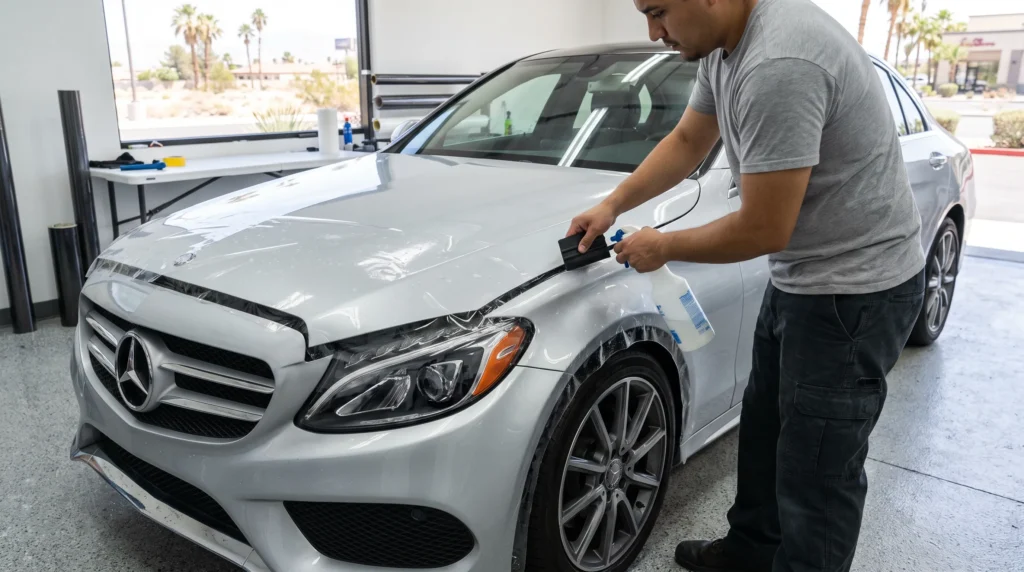
A low sports car may need more attention around rocker panels. A family SUV may benefit from rear loading-area protection.
Look at the way the vehicle is used rather than choosing a package only by name.
PPF for leased cars in Las Vegas can help protect factory paint during the time you have the vehicle, but the film should be planned around both your driving habits and your lease agreement.
Check your lessor’s rules first.
Then decide which areas face the most wear.
For many leased vehicles, that can mean front-end PPF, rocker panels, door edges, mirrors, or rear loading-area protection rather than full-body coverage.
Paint Protection Film Las Vegas serves customers throughout Las Vegas, NV and Henderson, NV from:
7585 Commercial Way Suite H Henderson, NV 89011
Our services include:
Call (725) 318-7445 or visit our contact page to schedule an appointment.
Business hours are Monday through Friday from 9 AM to 6 PM. Saturday is available by appointment.
You may be able to, but check your lease agreement and ask the leasing company before installation. Rules on aftermarket films and lease-return condition can vary by lessor.
PPF can help protect painted surfaces from certain chips, scratches, and road wear, but it cannot guarantee the return of a security deposit or prevent all lease-end charges. Your lease terms and the vehicle’s overall condition control the final inspection.
Front bumper, hood, front fenders, mirrors, rocker panels, door edges, and rear loading areas are worth considering. The right combination depends on how you drive and where the vehicle receives the most exposure.
Not necessarily. Many leased vehicles can benefit from targeted or full front coverage. Full-body PPF may make more sense when you want broad protection across most of the painted exterior.
That depends on the leasing company. Check your lease and contact the lessor. Do not assume clear PPF can stay on the vehicle simply because it protects the paint.
PPF may help reduce certain types of paint damage, but it cannot prevent every excess-wear charge. Lease inspections can also cover dents, wheels, tires, glass, interior damage, mileage, and missing equipment.
Paint Protection Film Las Vegas serves Las Vegas, NV and Henderson, NV from 7585 Commercial Way Suite H, Henderson, NV 89011. Call (725) 318-7445 or visit our contact page to schedule an appointment.
How Long Does Ceramic Coating Last in the Las Vegas Desert Heat?. How long does ceramic coating last in the Las Vegas desert heat is the question we hear most from drivers in Las Vegas, NV and Henderson, NV. The short answer: a professionally installed coating that’s prepped and maintained correctly can deliver multi-year durability even under intense sun and dust. The longer answer depends on paint condition, product choice, where you park, and how you wash. Let’s break it down so you can decide what’s right for your vehicle.
Complete Vehicle Protection & Customization
We specialize in Paint Protection Film (PPF), Color PPF, Ceramic Coating, and Paint Correction to keep your vehicle looking showroom-new for years to come.
From Window Tint to Vinyl Wraps and Commercial Wraps, we offer comprehensive customization solutions that combine style with function.


Experience the difference that precision craftsmanship and attention to detail can make. Call us at (725) 318-7445 or request a free quote to get started on your vehicle protection project.
Visit Our Shop